A clear walkthrough of every major batching plant component, from aggregate bins, conveyors and silos to scales, the mixer and the PLC control cabin, with a summary table.
Understanding concrete batching plant components and what each one does is the first step to specifying, operating and maintaining a plant well. A batching plant is not just a mixer: it is an integrated system that receives aggregates, cement and water, weighs each accurately, mixes them and discharges concrete into the truck, all under automated control. This article walks through each major component and its role in mix quality and output.
The Production Cycle at a Glance
Aggregates are stored in bins, cement in silos and water in tanks. Each material is drawn according to the mix design, weighed, delivered to the mixer, mixed for a set time and discharged into the truck. The better balanced the components, the shorter the cycle and the more accurate the mix.
Concrete Batching Plant Components: Aggregate System
Aggregate bins
Multi-compartment hoppers store different sand and aggregate grades. Automated gates below each compartment release material. The number and size of compartments determine how many grades you can use and how long you can run before reloading.
Weighing belt
Located beneath the bins, it receives and weighs aggregates as they are released. Its accuracy is central to mix proportions, so it needs regular calibration.
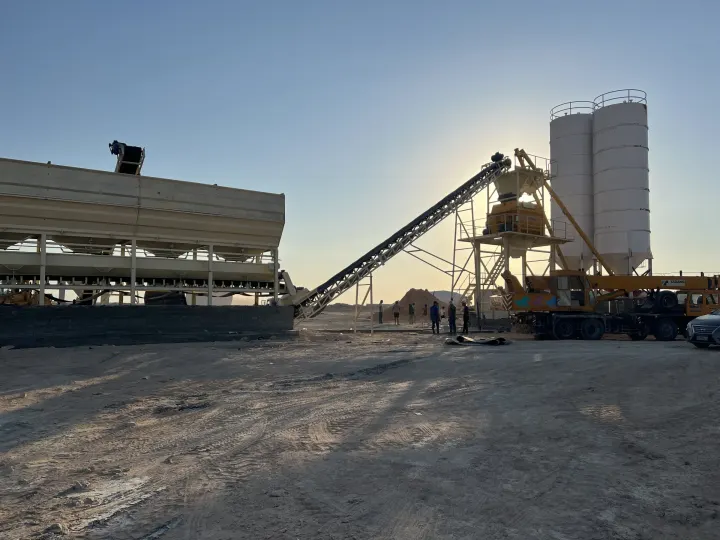
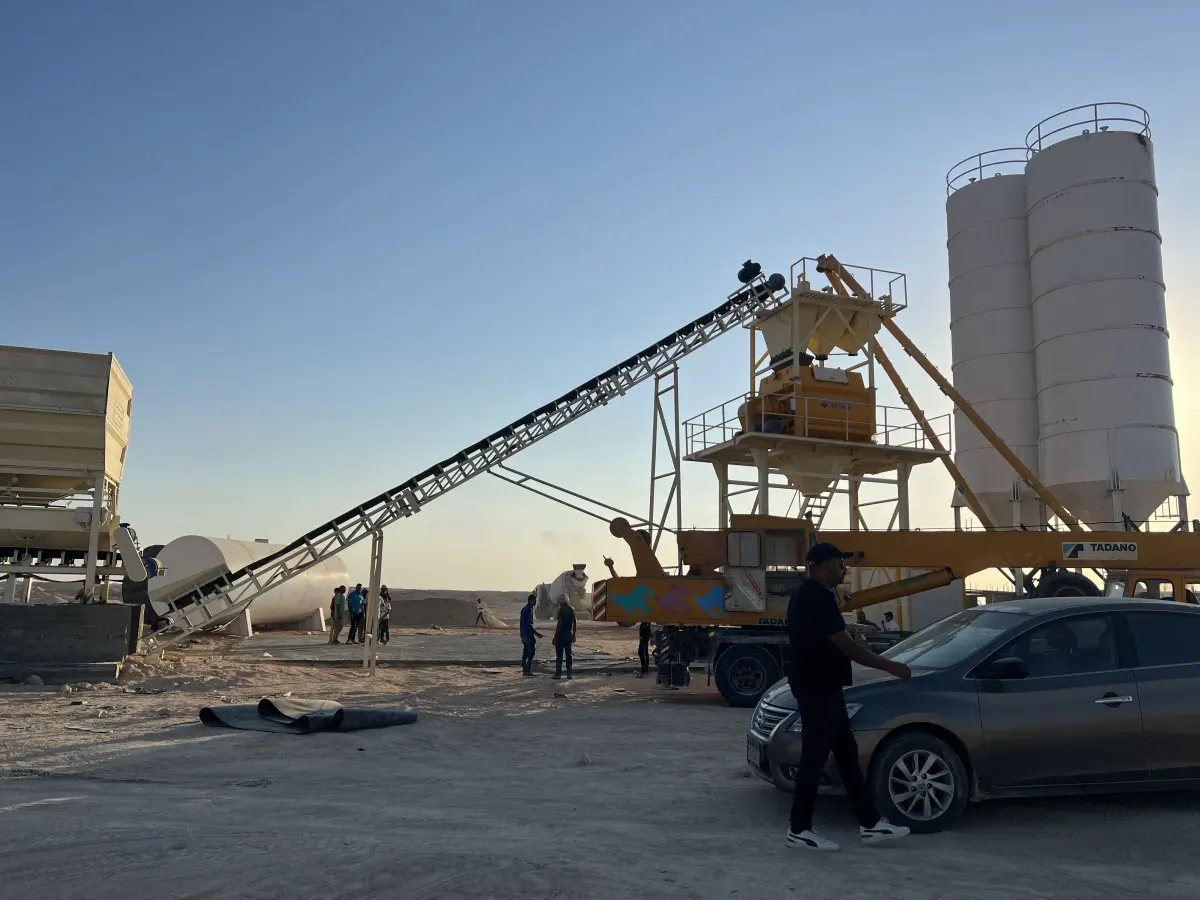
Inclined conveyor
Carries weighed aggregates up to the mixer platform. Its capacity and speed affect how quickly the mixer is fed. See our multi-purpose conveyor belts.
Waiting hopper
Sits above the mixer and holds the next aggregate batch while the current batch is mixing, significantly shortening cycle time.
Mobile stockpiling conveyor
Used to stockpile aggregates on site and feed storage areas or bins, simplifying inventory management at high-output plants.
Cement System
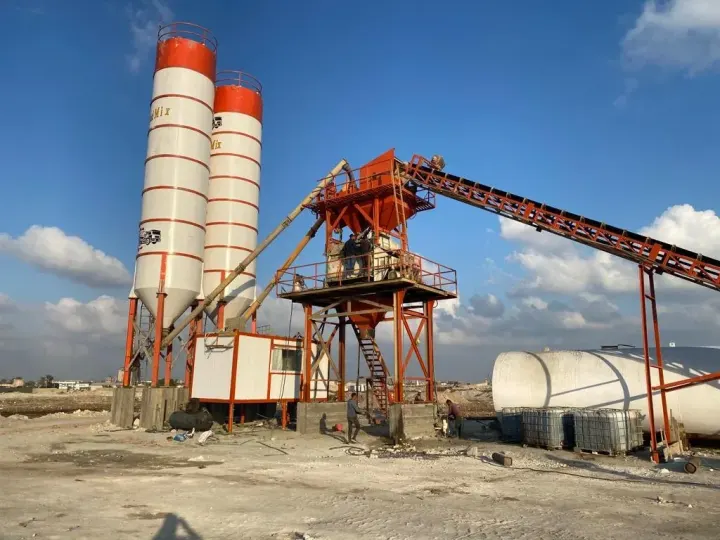
Cement silo
A sealed vertical silo protects cement from moisture and contamination, fitted with a dust filter, safety valves and level indicators. Silos are available at 60, 80, 120, 150 and 180 tonnes. Learn more about our cement storage silos.
Screw conveyors
Enclosed augers move cement from the silo to the cement scale at a steady rate while keeping it sealed from air and moisture.
Mixer Platform and Weighing
Mixer platform (batching tower)
A steel structure carrying the mixer, cement, water and admixture scales and the waiting hopper, designed for load and vibration and allowing direct discharge into the truck below.
Cement, water and admixture scales
Independent scales using load cells measure each material to the mix design. Their accuracy governs the water-cement ratio, the single most important factor in concrete strength.
The Mixer
The mixer turns separate materials into homogeneous concrete. Twin-shaft mixers dominate ready-mix plants, while planetary mixers suit applications needing very high homogeneity. Plants are available with Turkish, Chinese or Italian mixers.
Support Systems
Air compressor
Supplies compressed air for pneumatic gates and valves, silo filter cleaning and cement aeration. A weak compressor causes gate delays and weighing errors.
Water tank
Secures uninterrupted water supply, available at 50 and 75 m³.
PLC control cabin
Houses the automation system that runs the full cycle: opening gates, reading scales, running the mixer and logging each batch. The control room can be supplied inside a 3.5 × 2 metre caravan. Read more about our PLC automation systems.
How Components Affect Output
Real plant output is set by the slowest link, not the mixer alone. A slow conveyor, an undersized waiting hopper or screw conveyors that cannot feed the cement scale fast enough will leave the mixer waiting on every cycle. Every component should be sized to the target capacity, whether 60 or 130 m³/h, and reviewed together whenever the plant is upgraded or expanded.
Summary Table
| Component | Main function |
|---|---|
| Aggregate bins | Store aggregate grades and feed the belt |
| Weighing belt | Weigh aggregates on release |
| Inclined conveyor | Deliver aggregates to the platform |
| Waiting hopper | Pre-stage the next batch |
| Cement silo and screws | Store and deliver cement |
| Scales | Accurate proportioning |
| Mixer | Produce homogeneous concrete |
| Air compressor | Drive gates, clean filters |
| PLC cabin | Control the cycle and log data |
Related reading: twin-shaft vs planetary mixers and batching plant weighing accuracy.
Frequently Asked Questions
What is the most important component?
The mixer is the heart, but mix quality depends on the whole system, especially weighing accuracy and control.
Can components be added to an existing plant?
Yes. Silos, bins or control upgrades can be added after a plant assessment.
Which components need the most maintenance?
The mixer, conveyors, air compressor and silo filters need the most frequent checks, along with scale calibration.
Get a Balanced Plant
A successful plant is one whose components are designed to work together. Share your requirements and we will propose the right configuration. Request an estimated quotation.