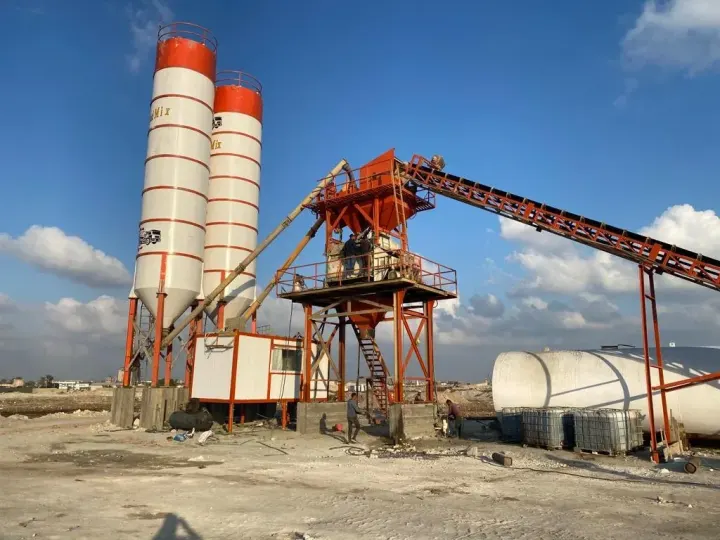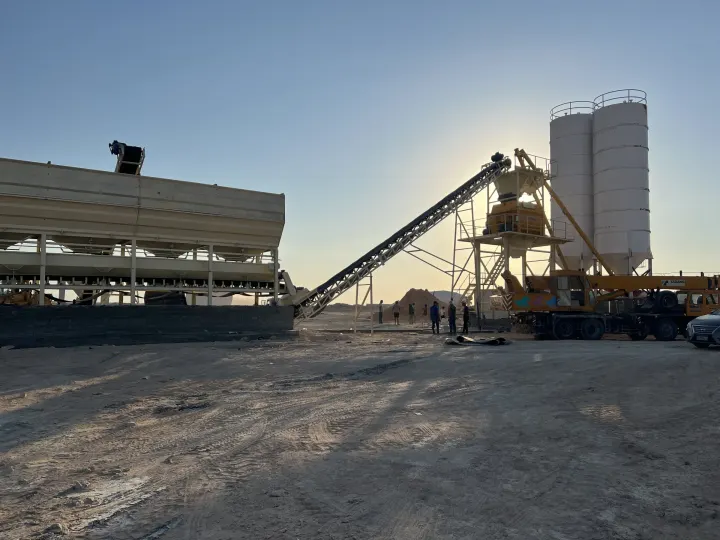
A practical explanation of twin-shaft and planetary mixers, covering mixing action, cycle time, homogeneity and maintenance, with a comparison table and clear selection criteria for your plant.
Twin-shaft vs planetary mixer is one of the most important choices in any concrete plant specification. Twin-shaft mixers are the first choice for high-volume ready-mix production with short cycle times. Planetary mixers are preferred where very high homogeneity matters most, as in precast concrete, paving blocks and special mixes. This article explains how each works, where each performs best and how to choose.
Why the Mixer Matters Most
Every other component, from aggregate bins and conveyors to scales and silos, exists to feed the mixer. It is where separate materials become homogeneous concrete. A weak mixer undermines strength and workability regardless of weighing accuracy or material quality, and mixing time directly sets cycles per hour and therefore real plant output.
How a Twin-Shaft Mixer Works
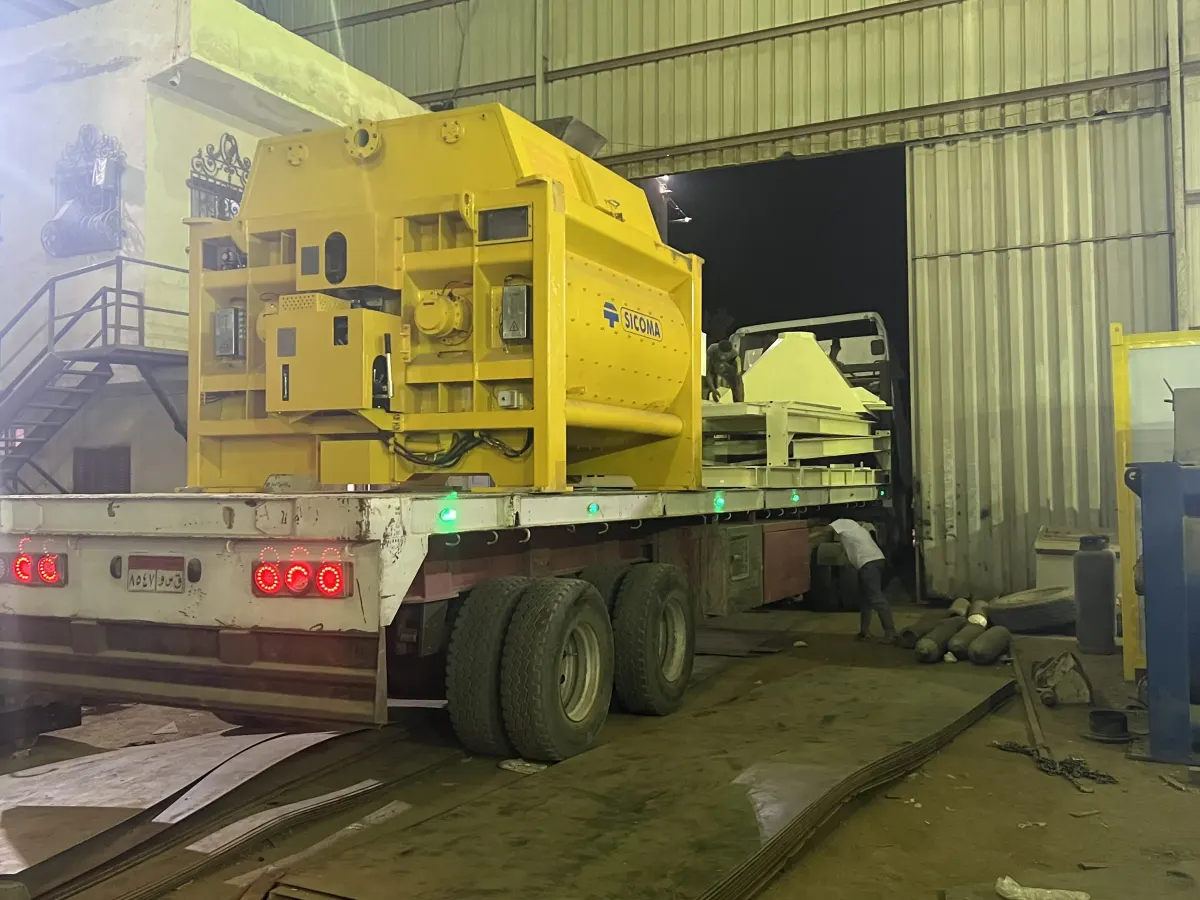
A twin-shaft mixer has a horizontal trough with two parallel shafts rotating in opposite directions. Arms and paddles set at specific angles drive material along intersecting paths, creating an intensive mixing action that produces a homogeneous batch quickly.
Strengths
- Short mixing time, maximising cycles per hour.
- Large batch volumes, which is why it dominates medium and large ready-mix plants.
- Versatility with stiffer mixes and larger aggregates.
- Fast discharge through a bottom gate straight into the truck mixer.
Watch points
- Liners, paddles and arms are wear parts requiring regular inspection and replacement.
- Shaft-end seals need consistent lubrication to keep slurry out of the bearings.
- Power demand is relatively high.
How a Planetary Mixer Works
A planetary mixer has a fixed circular pan. Mixing stars rotate on their own axes while travelling around the centre of the pan, like planets orbiting the sun. Side scrapers keep the walls clean and return material to the mixing zone. The combined motion covers almost the entire pan and delivers very high homogeneity.
Strengths
- Excellent homogeneity for coloured, high-performance and sensitive mixes.
- Efficient with smaller batches and frequent recipe changes.
- Multiple discharge gates to feed more than one production line.
- Easy cleaning thanks to the open pan design.
Watch points
- Batch sizes are usually smaller than twin-shaft units in the same class.
- Cycle times can be longer, limiting hourly output for ready-mix.
- The gearbox assembly needs careful maintenance and correct lubricants.
Twin-Shaft vs Planetary Mixer: Comparison Table
| Criterion | Twin-shaft | Planetary |
|---|---|---|
| Mixing action | Two horizontal counter-rotating shafts | Stars rotating on their axes and around the pan |
| Cycle time | Short | Relatively longer |
| Batch size | Large | Small to medium |
| Homogeneity | High | Very high |
| Typical use | Ready-mix and major projects | Precast, blocks, special mixes |
| Maintenance focus | Paddles, liners, seals | Gearbox, arms, scrapers |
Which One Should You Choose?
Choose a twin-shaft mixer if your core business is ready-mix supply, you need medium to high capacity such as 80 to 130 m³/h, or you serve infrastructure projects with continuous pours. Explore our ready-mix concrete batching plants.
Choose a planetary mixer if you produce precast elements, paving or coloured concrete, or need smaller batches with frequent recipe changes. For block and paver production, planetary mixers are usually preferred because the semi-dry mixes need even distribution of cement and pigments. See our cement block and interlock plants.
Common Selection Mistakes
- Choosing on price alone without considering spare parts and maintenance cost over the plant's life.
- Undersizing the mixer, making it the bottleneck however efficient the rest of the plant is.
- Ignoring the target product, such as buying a ready-mix mixer and then moving into precast.
- Overlooking site power supply before finalising the mixer.
Mixer Origin and Spare Parts
Origin affects performance, running cost and serviceability. Mousa Sons supplies plants with Turkish, Chinese or Italian mixers, selected by quality target, budget and parts availability. Never choose a mixer whose parts are not available locally: when the mixer stops, the whole plant stops. Learn about our genuine spare parts supply.
Related reading: concrete batching plant components, how to choose plant capacity and block and paver plants, where planetary mixers are preferred.
Frequently Asked Questions
Can a planetary mixer be used for ready-mix?
Technically yes, but it is usually less efficient than a twin-shaft mixer for high volumes and short cycles.
Can the mixer type be changed in an existing plant?
Sometimes, as part of an upgrade project after reviewing the structure, mixer platform and control system.
Does the mixer affect cement consumption?
Good mixing distributes cement evenly and achieves target strength consistently, while poor mixing can push producers to add cement to compensate.
Choose the Right Mixer for Your Output
Tell us what concrete you produce and the capacity you need, and our engineers will recommend the right mixer type and origin. Request an estimated quotation today.