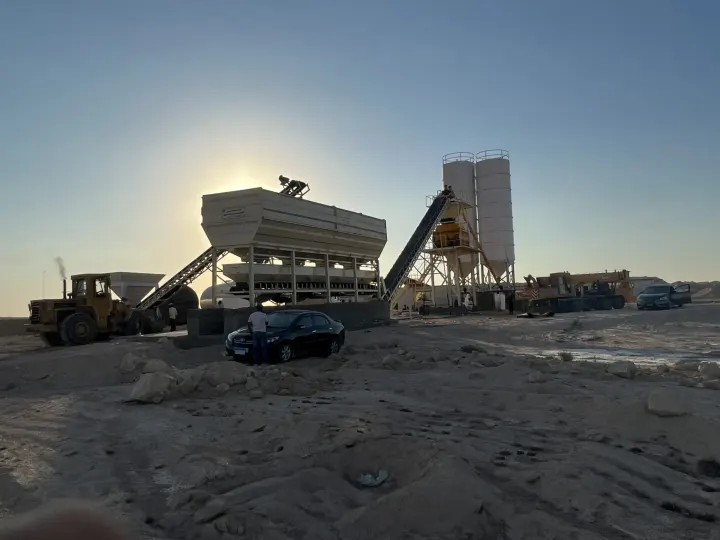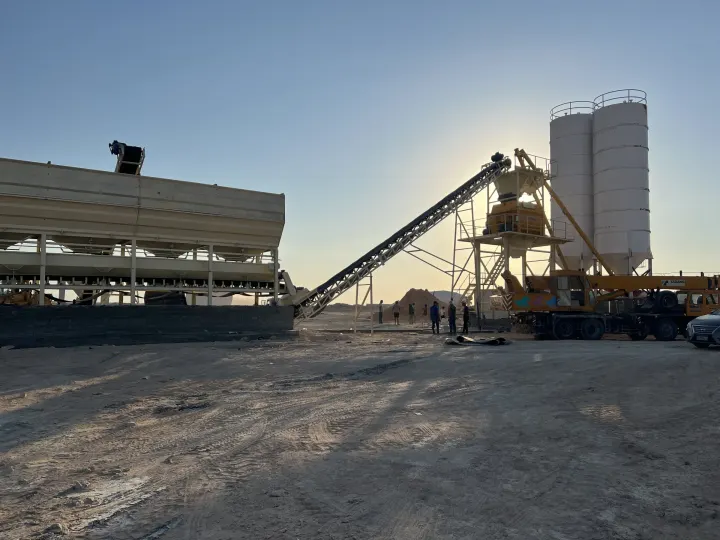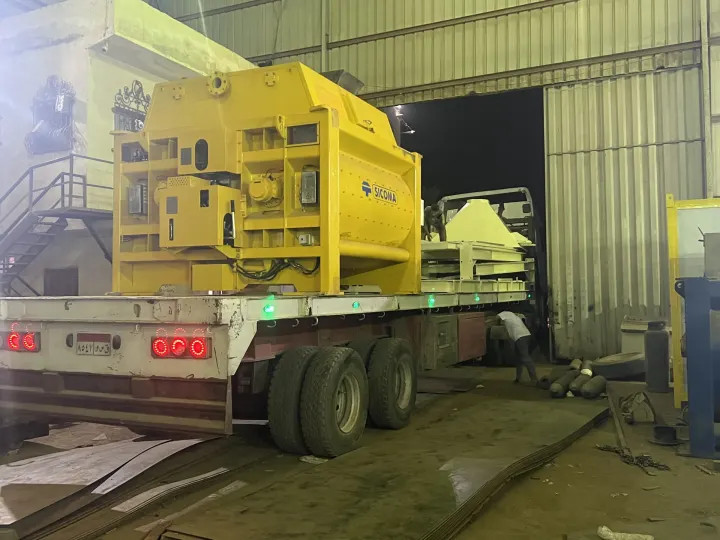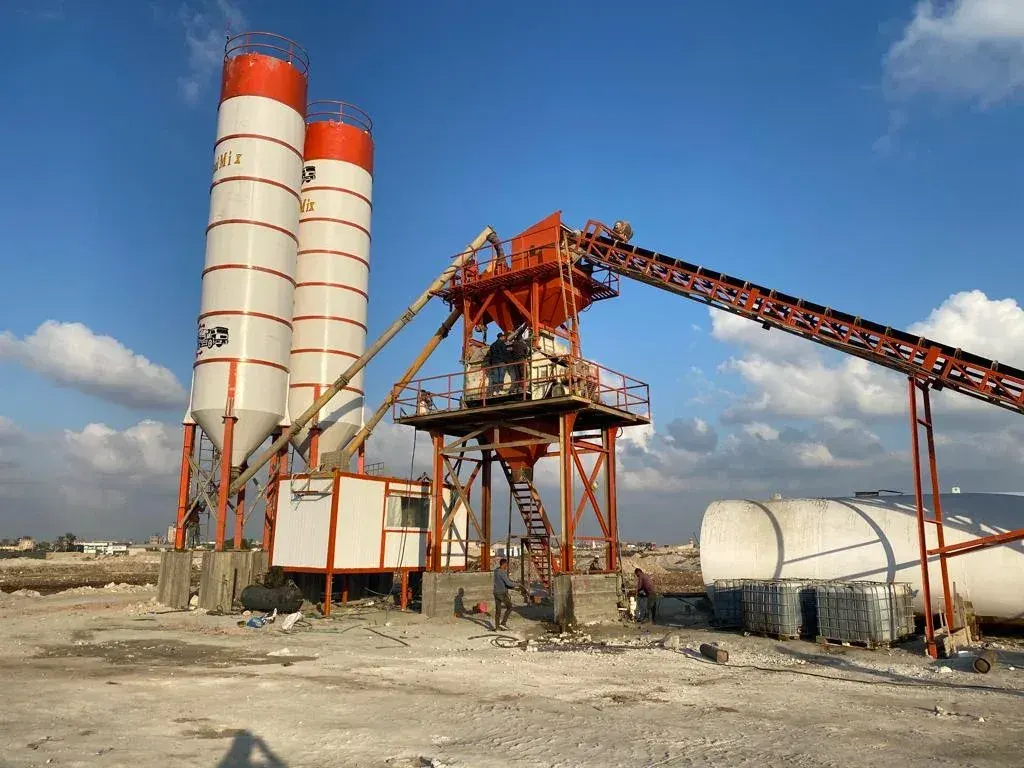
A practical guide for contractors and ready-mix producers covering seven key criteria for choosing a batching plant, from capacity and mixer type to site conditions and after-sales support.
This concrete batching plant buying guide answers one practical question: which plant is right for your project? In short, the right plant matches your real peak demand, your site conditions and the concrete you need to produce, and it comes from a partner able to install, maintain and support it for years. Below are the criteria that contractors and ready-mix producers should weigh before requesting quotations, drawn from the experience of Mousa Sons, which has manufactured and installed batching plants in Egypt since 1991.
Why a Concrete Batching Plant Buying Guide Matters
A batching plant is the core asset of any concrete operation. An undersized plant creates bottlenecks on peak pouring days and delays slabs and foundations. An oversized plant ties up capital that never earns a return. Getting the specification right protects mix quality, delivery reliability and day-to-day operating costs, so the decision should start from your actual demand rather than a supplier catalogue.
Production Capacity
Plant output is measured in cubic metres per hour. Mousa Sons supplies plants rated at 60, 80, 100, 120 and 130 m³/h. To choose between them, consider:
- Peak-day volume, not just the monthly average. Slab and foundation pours drive the real requirement.
- Truck mixer fleet size. A plant cannot effectively produce faster than your trucks can deliver.
- Growth plans. Sizing for expected expansion is usually cheaper than replacing the plant later.
Remember that rated capacity reflects ideal conditions. Actual output depends on mixing time, mix design, loading efficiency and site logistics. Our capacity selection guide walks through the calculation step by step.
Stationary or Mobile
A stationary plant suits commercial ready-mix operations and long-term projects on a single site, offering larger storage and easier expansion. A mobile plant suits contractors who move from project to project, since it can be dismantled, relocated and re-erected faster. If you will stay on one site for years, stationary is usually the better fit; if your work moves, mobile saves time at every relocation. Read the full stationary vs mobile comparison.
Mixer Type and Origin
The mixer determines mix homogeneity and cycle time. Twin-shaft mixers are the standard choice for ready-mix production thanks to intensive, fast mixing of large batches, while planetary mixers are typically preferred where very high homogeneity is needed, such as precast work. Mousa Sons plants are available with Turkish, Chinese or Italian mixers, selected according to quality targets, budget and spare-parts availability. Read our detailed twin-shaft vs planetary mixer comparison.
Ancillary Equipment
A plant is a complete system, so compare quotations line by line:
- Aggregate bins: number of compartments for the sand and aggregate grades you use.
- Cement silos: quantity and size, available from 60 to 180 tonnes (see our cement silo sizing guide).
- Weighing systems for aggregates, cement, water and admixtures, where accuracy directly affects quality (see why weighing accuracy matters).
- Control cabin and PLC managing the cycle and recording batch data.
- Water tanks, air compressor, conveyors and screw conveyors.
See what each part does on our batching plant components page, or read our guide to batching plant components.
Automation and Control
A PLC control system turns operator-dependent production into consistent, repeatable output. It stores mix designs, sequences weighing, discharge and mixing, reduces human error and keeps records for quality and consumption tracking. Ask how easy the interface is, how recipes are edited and who supports the software. Learn more about our PLC automation and control systems, and read why a PLC control system is essential.
Site Conditions
Assess available space, soil and foundation needs, water and power supply, truck access and aggregate stockpile areas. These factors may favour one layout over another or call for a custom concrete plant design built around the constraints of your site.
Supplier and After-Sales Support
The most expensive plant is the one standing idle. Evaluate the supplier as carefully as the equipment: proven track record, in-house installation and commissioning, local stock of genuine spare parts, preventive maintenance programmes and operator training. Mousa Sons brings more than 30 years of experience, more than 100 completed projects and more than 50 clients, covering the full cycle from design and manufacturing to maintenance and technical support.
Quick Checklist Before You Request a Quote
| Item | Question to answer |
|---|---|
| Capacity | What is your peak-day pouring volume? |
| Type | Will the plant stay on one site or relocate? |
| Mixer | What concrete grades and homogeneity do you need? |
| Storage | How many aggregate grades and cement types? |
| Control | Do you need full automation and batch records? |
| Site | What space, water and power are available? |
| Support | Who handles installation, maintenance and parts? |
Frequently Asked Questions
What capacity suits a contractor just starting out?
It depends on expected contract volumes. Many contractors start with mid-range capacities such as 60 or 80 m³/h and a layout that allows future expansion. Review your real workload with a technical team first.
Can a plant be installed on any site?
Most sites are suitable after a review of soil, space and utilities, though some require layout changes or special foundations.
Is installation and commissioning included?
Yes. Mousa Sons installs and commissions plants through to the first batch, and also provides operator training and preventive maintenance.
How do I find out what my plant will cost?
Cost depends on capacity, mixer type, number of silos, automation level and site requirements, so there is no single figure. The accurate route is a quotation based on your specification. Each factor is explained in our batching plant cost factors guide.
Start With the Right Specification
Share your required capacity, site details and concrete type, and our engineers will recommend the right configuration. Request an estimated quotation today or call us on 01274697017.